
So, “Digital Sovereignty.” The new “Kampfbegriff” (combat term), as they say here in Germany. It’s remarkable how quickly a single phrase can make you a tech hero or a protectionist villain before you’ve even had your morning coffee. Everyone tells me you must have it. No one quite agrees on what it is, but it sounds expensive, deeply political, and probably involves lots of PowerPoint slides with shiny shields on them.
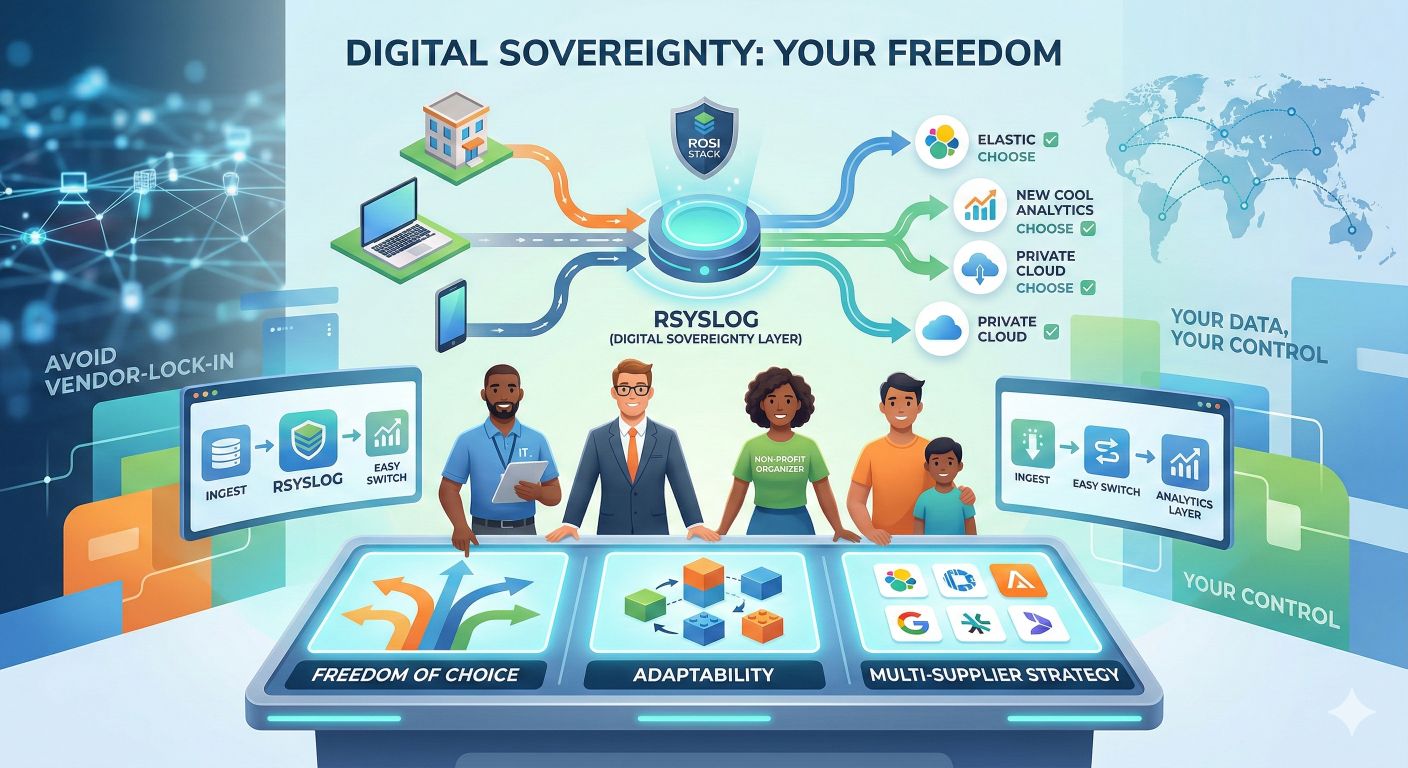
Honestly, the whole “exclusionary” or “punitive” framing of the term just makes me… well, let’s go with “mildly disappointed.” For me, this shouldn’t be a grand ideological statement. It’s much simpler. Digital Sovereignty is just Freedom of Choice. That’s it. No more, no less. It’s the right to change your mind without your entire infrastructure collapsing like a house of cards.
It isn’t about punishing tech providers. They should want you to love their product, not feel like you’re locked in a trunk. Whether you’re managing a multi-national conglomerate, a non-profit, or just trying to handle the photo backups for your family:
- You want to ensure you can adapt to changing needs.
- You want to ensure if one supplier is unable to deliver, you have a quick way to switch to another.
- You want to ensure that you can switch if prices rise too high.
This all seems just straightforward, doesn’t it? It’s not about autarky or isolation; it’s about not being cornered.
In that sense, I genuinely believe rsyslog is a “digitally sovereign” solution for everyone on this planet. Our entire philosophy is based on avoiding vendor lock-in. We are the digital equivalent of that annoying person who asks, “But can you exit?” at every single sales pitch.
We know there will be a time when you want to switch from Elastic to the next “cool stuff” analytics layer (perhaps one that doesn’t feel the need to reinvent its license every fiscal quarter). If your ingest layer is rsyslog, that transition is easy. You keep your ingest layer completely as-is, and simply swap the analytics backend. Now, try doing that with a single-vendor, semi-open-source-ish solution. Good luck. You’ll need it.
This philosophy is also the driving reason why we created—and continue to extend—the ROSI stack. We wanted to provide the necessary building blocks so that you can build an operational system you actually own, rather than just renting space in someone else’s data fortress. Digital sovereignty shouldn’t be a weapon; it should be common sense.